The ingredients of a successful homeschool…

I reckon the more of the following you have, the greater the chances homeschool will work.

More than 1 child – It certainly makes it more challenging if you only have one child. You’ll have to work a lot harder to make sure the child spends time with other kids.

Children of a similar age – Too big an age gap and it means the kids will not be able to do things together as well as if they’re a similar age.

One parent stays at home – Given how easy homeschool is, that parent would ideally be able to work from home. Homeschool without one parent staying at home is not viable, in my opinion.

One parent, ideally the one that stays at home, is fairly educated – Any degree would do. They need to have the confidence to build and monitor a program.

The parent that stays at home needs to be motivated and have a high standard – He or she needs to drive the kids and the teachers. The more ambitious the parent, the better the kids will do. The parent also needs to ensure he or she takes the kids out almost every day else the kids will go nuts, so can’t be lazy. One of the main reasons homeschool has worked so far for us has been Isabelle’s high standards, something she has in everything she does. An A* in a practice paper is not good enough, it needs to be a high A*. I guess it was the same for me in maths.

A strong local community with plenty of kids – so the kids can play with other kids that live next door.

A good relationship with the children – if there is already some friction between the parents and the child, it’d probably only get worse if you homeschool.

The financial means to homeschool – it’s very cheap compared to a private school, but if the government is paying your kids’ school fees then homeschool is the expensive option. Just bear in mind my kids should have finished their high school exams at around 13 (hopefully), so we’re only paying for 5 years of teaching.

A spacious home – being cramped up in a small space wouldn’t be fun, but you can work around it. For example, near exam time when I spend time over the weekends teaching the kids, I often take the kids to coffee shops for a change of environment, often jumping from coffee shop to coffee shop so we change the environment, and I often get a lot of my own work done at the same time on my laptop.

A few essentials things that schools miss out…

Every few weeks Isabelle gets the kids to cook us some food. Cooking is an essential skill that schools don’t teach.

The kids grab raw ingredients and make some fantastic dishes. I’m always impressed. With all the crap they put in restaurant and ready-to-eat meals it’s a skill worth having.

There are a number of other things I can think of from the top of my head that most schools do not teach that every child really should know about:

  • Current affairs
  • Domestic skills including laundry and ironing
  • A balanced diet and understanding food labels
  • Personal finance including investing, debt and mortgages, whether to buy or rent, negotiation 
  • Some basic understanding of the law and their rights

I feel home school, if done right, prepares kids better for the real world. The fact that the kids have so much time with us, we pass a lot more of our knowledge and experience to them than if they went to school, and frankly no-one will do it with as much passion as us…

Homeschool 2.0

Since starting homeschool our original plans for our kids have been tweaked.

We’ve decided to get their GCSE’s and A-levels out of the way as soon as possible, so the kids can focus on their passions. Exams are a stressful part of childhood, for many the worst part of childhood. The hard laborious work, constant pressure, expectations, competition, and public shaming and condescending advice if you get bad grades isn’t exactly pleasant, and nearly all the stuff learned is useless. To this day I occasionally wake up, in a cold sweat, worried that my university finals are around the corner and I’ve forgotten to prepare for them – that’s how stressful they were.

Hopefully Maryam, 11, will have finished her A-levels when she’s 13, Danyal, 9, will be done by the time he’s 12, and Sabeen, 7, should finish when she’s 12. The reason Maryam finishes later is because she started home school the oldest. They’ll only take exams if we feel they’ll get A*s, so if they don’t look like they’ll get the A* they’ll wait until the next exam date.

A significant benefit of doing the exams early is it sounds way more impressive on a CV, so everyone will assume they’re hyper-intelligent, when they’re not.

For those that haven’t read my earlier blogs the odd thing about this all is that my kids aren’t working hard, unless it’s the period leading to public exams. They do work intensively 7am until noon, five days a week, but that is pretty much it – they have very little homework – and so the weekends completely off. The effectiveness of 1-to-1 teaching is what is driving things. Isabelle and myself, for that matter, aren’t working hard either.

Most good schools make 9 or 10 GCSE’s and 3 A-levels standard. We’ve decided on 5 GCSE’s, and 4 A-levels.

We’ve reduced the GCSE’s because when one has A-levels, the GCSE’s become fairly irrelevant. Students do an impressive number of GCSE’s because when they are applying to universities they do not yet have their A-level grades, so universities base their offers on the GCSE grades, but if our kids apply to university, they will have already finished some A-levels.

Another thing that we’re doing different is staggering the exams. Schools make their students do all their GCSE’s at one time, like over a summer. This is just plain stupid. That’s the best way of making students do as badly as possible.

So Maryam recently completed 3 IGCSE’s – Maths, Biology, French. She’ll do Physics in 3 months time, in November 2016, and two months later she’ll do an IGCSE in Accounting (taught by Isabelle, a Chartered Accountant). Getting an A* when she’s going to be spending the prior few weeks focusing on that subject suddenly doesn’t sound so stellar. So after her Accounting IGCSE, she’ll do 2 A-levels in the middle of next year, and a final 2 the following year.

Note Maryam is not doing an English GCSE – compulsory in schools in the UK. I checked up with the top universities and none have it as a requirement.

For Danyal the plan is for him to start his maths A-level after he’s done his Physics iGCSE which he’s hoping to do in November 2016. So he might have finished an A-level or two before he’s done with all his GCSE’s. He’s good at maths (like his father before him!).

We don’t yet have much of a plan for Sabeen but I’m hoping she might be ready for her IGCSE maths next year, in June 2017. We’re kind of assessing her aptitude and interests.

Finally, the kids are continuing to learn their languages and play their sports, as per Homeschool 1.0, but once they start going for the GCSE’s and A-levels the hours are somewhat reduced, with exams the clear focus. We just want to get the exams out of the way…

iGCSE results!

So Maryam, 11, got A*s in Maths, Biology and French, and Danyal, 9 got an A* in Maths.

We’re obviously really pleased!

We don’t know the grade boundaries but going on the average of past papers, all 4 A*s were comfortable – around 7-10% above the minimum required.

It’s interesting that most UK school children will study biology for around 9 years (in the early years as part of science) before they take a Biology GCSE – and Maryam took 1/6 of that. In my estimation around 30% of kids doing what we’re doing could too, with another 50% taking less than 30 months to get an A*. The remainder 20% probably wouldn’t be bright enough to get an A*, but I think most of them would end up getting A’s. Just my guess – I don’t have any stats to prove it.

Anyway, glad to get this hurdle out of the way…

From 75% to 95% in 12 weeks…

Constantly measuring progress and having clearly defined targets are crucial for high achievement. I use it extensively in many aspects of my life, including business, my weight, running, etc…

In iGCSE maths (Edexcel board) the % boundary varies from paper to paper but it’s ball park 60% for an A and 80% for an A*.

In April the kids were averaging around 75%, so a high A. In the next 12 weeks I made them do one past paper a day, nothing else. You’ll note that in the graph it doesn’t show a past paper every day – during those days the kids did a paper they had already done – and the marks were not included. You can see that the lowest mark in the 8 papers in June was 91%. Let’s hope they didn’t mess up the actual exams!

So if anyone out there wants to improve their maths grades, the lesson is clear – do past papers! Both my kids went from around 75% to 95% in just 12 weeks.

BTW both kids were highly motivated throughout. They wanted to outdo each other – but they were also interested in seeing all the stats I’d give them – the graph above, last 5 exams average, etc… and if they hit their targets they didn’t have to do a paper the next day. They also loved the fact that they were doing the exams 5 and 7 years early – gives a great feel good factor. And finally they knew that if they didn’t get an A* they’d be resitting it in 6 months…

Phase 2 – beyond age 10

In early 2015, when Maryam was nearly 10, we started to sense that Maryam’s reading, writing and reasoning were at the point she could kind of get things. So we thought it might be a good time for her to start preparing for a few of her GCSE exams.

GCSE’s are taken by all 16 year olds in the UK, who typically take between 5 and 10 subjects, with the exams taken in the space of two or three months.

I felt that by Maryam doing only 3 GCSE’s in one year it would give her an advantage compared to other kids who would be taking 9 or 10. She could spend around 3 times as much time per GCSE.

So, we decided she’d do the following GCSE’s:

i) Maths – she was already around 4 years ahead through doing 1 hour’s Khan Academy (www.khanacademy.org)  every weekday, so a GCSE seemed achievable.

ii) French – she was conversant as Isabelle made her speak French to her if Maryam wanted her dessert in the evening.

iii) Biology – seemed to be a subject that was standalone and involved a lot of memorisation, which Maryam was good at. Maryam also had an interest in it over chemistry, the other memorisation subject.

Notice how individual this was. No school in the UK allows students to decide which subjects to do when. I had to do 9 GCSE’s all in the same year. Why? If I was strong at maths and physics shouldn’t I have done them earlier, and my weaker subjects later? Even if to stagger things so to avoid exam cram. Shouldn’t kids being doing the exams when it’s right for them, not right for the school? It’s not possible at school because there needs to be set classes that all do the work at the same pace. The idea of doing GCSE’s based on my kids’ personal circumstances was liberating.

Now the GCSE’s are a two year course. But given the focus and one to one teaching we thought we’d hopefully need 18 months to get these 3 GCSE’s done.

Isabelle took charged of French and biology – she works from home which made that possible. I took charge of maths – 1 hour in the morning before I rush off to work. Just like in my businesses, responsibilities were clearly defined as were timelines and targets – 18 months to get the top grade (A*’s) in each subject (around 7% of GCSE’s taken are awarded A*’s).

Biology: I was surprised by Isabelle’s decision to teach biology herself given that she’d only studied biology to around GCSE level around two decades ago and following the French syllabus. But she said she’d learn it with Maryam. Bear in mind that Maryam had never studied biology before, unlike most school kids. Isabelle used textbooks, workbooks, and past papers. I should point out that Isabelle is one of the most intelligent people I know so this isn’t for everyone.

French: French was easy for Isabelle to teach, as she’s French. I think Isabelle used an exercise book, vocab lists and past papers.

Maths: For maths we just did past papers, that’s it. No textbook, no exercise book, no notes. That’s my way. So while Khan Academy had taught them around 60% of what they needed to know, the remainder 40% they’d learn through doing questions, and me helping or teaching when she got stuck. I tried to get Maryam to Google things so she’d learn the art of teaching herself, but that didn’t work. She gave up too easily. I’ll leave that for later. When we started going for the GCSE Danyal was almost at Maryam’s level in maths, despite him being 2 years younger, so I decided to teach them maths together. You see that flexibility of home school again?

So during the next year Maryam spent around 4 hours a week on biology, 2 hours a week on French, and 5 hours a week on maths (where Danyal joined in). 2 to 3 months prior to the exams that doubled, and 2 weeks prior almost trebled.

So that brings me to today, 18 months from when they started. A few weeks ago they finished their respective GCSE exams. They actually did international GCSE’s, not GCSE’s but they’re basically the same thing.

We don’t know the result of their GCSE’s yet as they haven’t been released, but Maryam was getting high A*’s in all 3 of her subjects in most past papers before the exams. And Danyal was getting high A*’s in most of his maths papers.

The entire experience was learning for us too, and by going through the process we decided to make some changes for future years and for our littlest one, Sabeen. But that will be in another post…

Homeschool 1.0

Our initial vision for homeschool is essentially something we have stuck with.

Academia

We wanted to teach the kids maths and 6 languages up until around the age they could start preparing for high school exams and once their English, logic and maturity was at a level they could prepare for the exams they would start doing them.

Note that meant no sciences, history, geography, etc… up until essentially 9 or 10.

Here is how we taught the languages and maths:

Maths – I taught my kids maths using Khan Academy for 1 hour every weekday. It wasn’t a case of letting the kids get on with it – I was very much involved in explaining all the concepts to them.

English – my wife, Isabelle, just gave the kids exercises from various books and marked them. The kids started reading so much, as they had so much time, that we did not need much beyond that.

French – Isabelle is French. So she spoke to the kids in French from an early age. And then she started giving them written exercises. All she’d do is give the exercises and mark them, explaining what they got wrong.

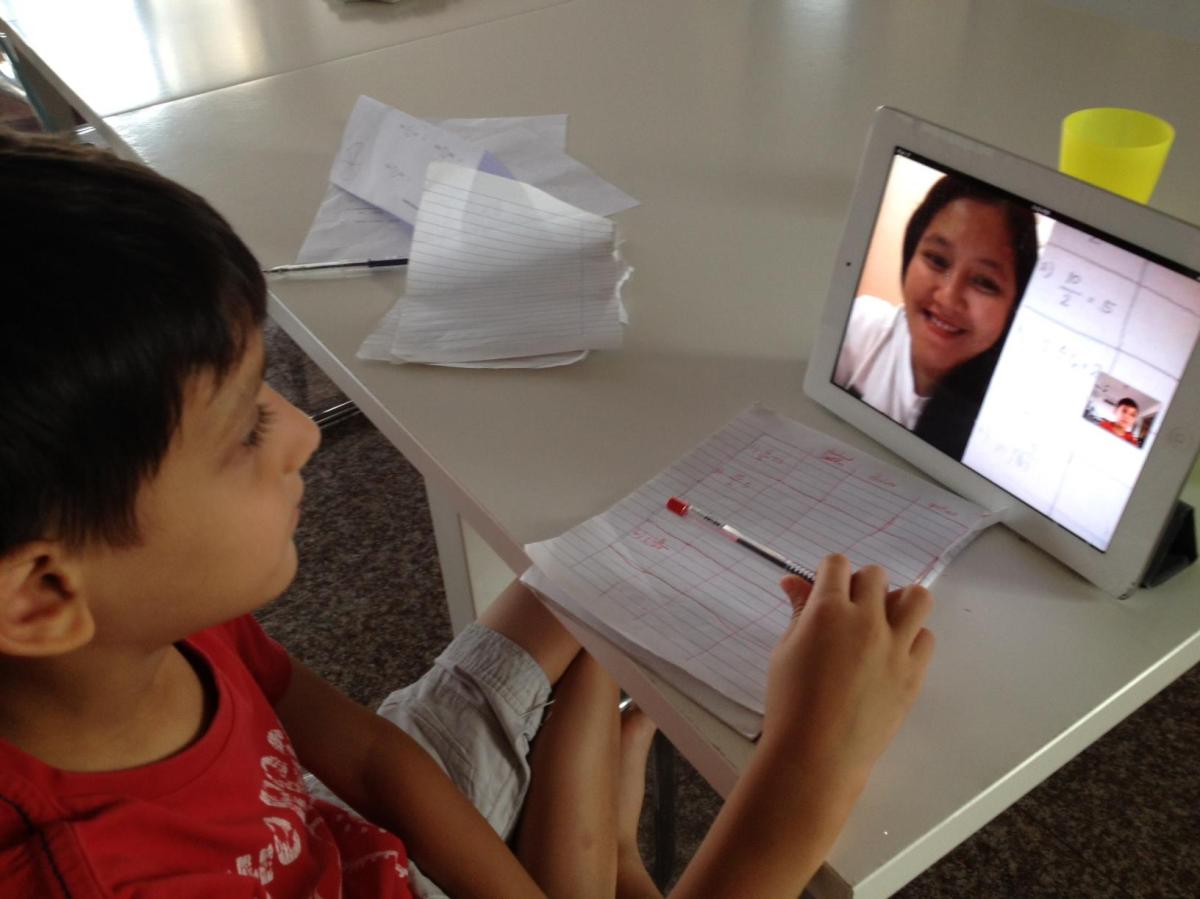
Arabic, Chinese – tutors came in twice a week and taught each kid separately. We realised that the kids weren’t improving their conversational skills nearly quickly enough in either languages. So then we hired native speakers to just chat with them over Skype for 20 mins each twice a week, and this worked wonders in terms of their ability to converse.

Urdu/Hindi, Malay – these languages we decided to focus on the spoken only. So it’s just chatting over Skype for 30 mins twice a week.

After they reached a certain maturity, we would then started going for high school exams.

They work 7am until 12pm flat out, and then they’re done. No homework, no work on the weekends.

Sports

The kids chose a few sports and they’ve stuck with them, and become good at them. We didn’t want them to become jack of all, masters of none.

For Danyal it’s middle-distance running, football and squash. Maryam and Sabeen haven’t been too keen on sports and they’ve just done rock climbing and they often join Danyal on his runs.

Socialising

Most days my wife would take them out just so they meet other kids. For sports, to meet friends or for other group activities – often with other home schooled kids.

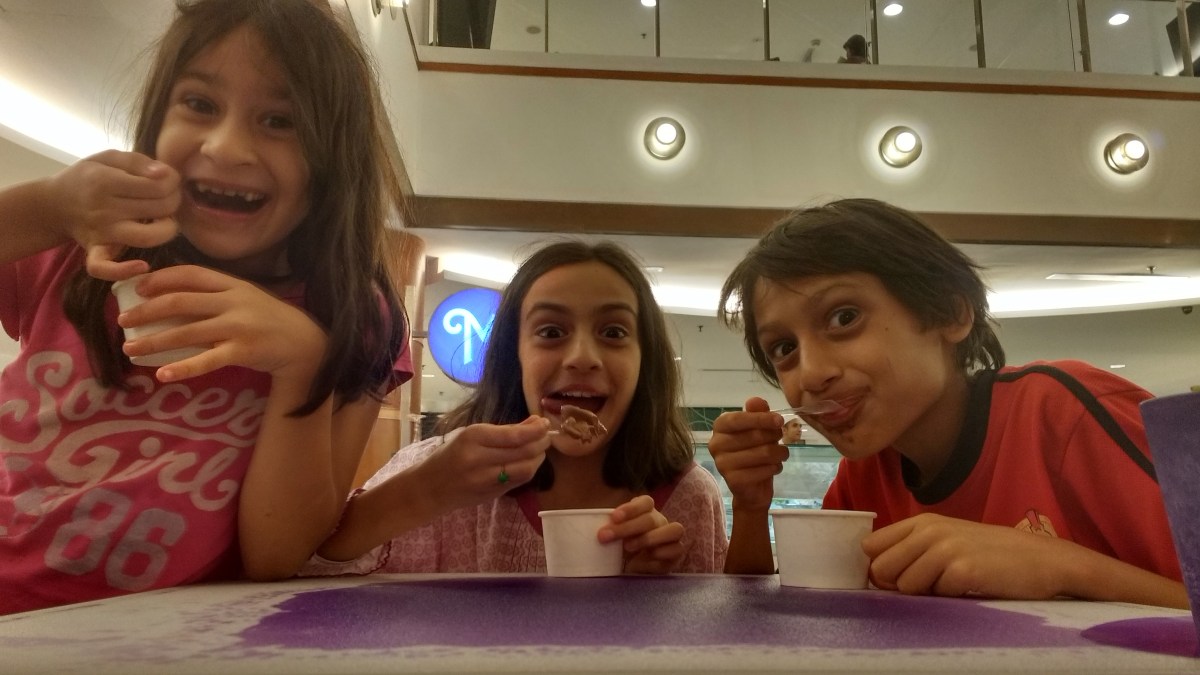
So all of this has been our plan from the beginning and we have stuck with it. We think it’s worked – Maryam could speak 5 languages well (Urdu/Hindi got left behind) by the time she was 10, all 3 kids are around 5 years ahead in their maths, they play their chosen sports regularly and to a high level, and have a great social life. They’re confident, cheeky yet well behaved when they need to be. And they have plenty of time to do what they want (read, cook, etc…), and are among the happiest, if not happiest, kids I know. I call that a result.

It’s the post 9-10 age where we have somewhat changed our vision, but I’ll discuss that in another post…

Isn’t homeschool for losers?

Prior to mid 2013 if you had told me that you homeschooled your children I would have thought you were nuts and you and  your children were losers.

By year end 2013 we had given notice to our kids’ schools that we were done with school.

What happened?

Well, a few things came together from mid 2013:

  1. One to one teaching. I realised my kids’ schools weren’t really challenging my kids in maths, so I started to teach my kids maths on the 10 minute drive to school. No structure, no whiteboard, no textbooks but they learned far more during the 10 minutes drive than the school was teaching them throughout the day together with all their homework. So I hired a teacher on Skype for US$5 per hour to teach them maths on the weekends instead of teaching them in the car, and within weeks their maths had progressed way beyond their colleagues. The benefits of one to one teaching were becoming clear.
  2. School too hectic. We wanted our kids to play sports, learn Mandarin, Urdu, French, and Arabic (all outside school as their school didn’t offer those languages), do their extra maths lessons. Lessons after school, lessons during the weekend, collecting the kids, dropping them off, it all become a bit much, for us and the kids.
  3. A great example. One of my friends from the UK had visited us in Malaysia, and his 4 kids were homeschooled. I asked myself which kids were the best brought up kids I knew and I realised that they stood head and shoulders above any other kids I’d seen. They were academically years ahead of their peers, social, cheeky, polite, and unlike most other kids were able and interested in talking to adults, and they were great with other kids too.
  4. US study. I saw a nationwide US study that showed that homeschool kids massively outperformed school kids academically, in social activities, and at college, if that is where they went on to.

In late 2013 I discussed the idea with Isabelle, who is more risk averse than I am on radical ideas like homeschooling, and to my surprise she agreed that we should give it a go over the Christmas vacations and if it worked well we’d try it for a year. She too felt that the kids could learn so much faster if they were constantly challenged and had 1 to 1 tuition. She also felt we could customise every aspect of their education to what the kids wanted and what we wanted for our kids.

We asked the kids. The two younger kids, Danyal, 7,  and Sabeen, 5, were all for it. They loved the idea of doing lessons in their pyjamas, and seemed to hate the routine of school. They didn’t seem to care about missing their school friends (rather worrying) despite both being fairly popular and social. The eldest, Maryam, was marginally in favour of homeschool only because we agreed with her that she wouldn’t get homework, she’d no longer have weekend classes, and we assured her that she’d still see friends regularly. That mattered to her more.

The Christmas trial went very well, and so we gave their schools notice and a one year homeschooling trial it was. And since the one year trial started we haven’t even once considered sending them back to school.

Homeschooling was not just good. It was far better in so many aspects than we had even hoped…